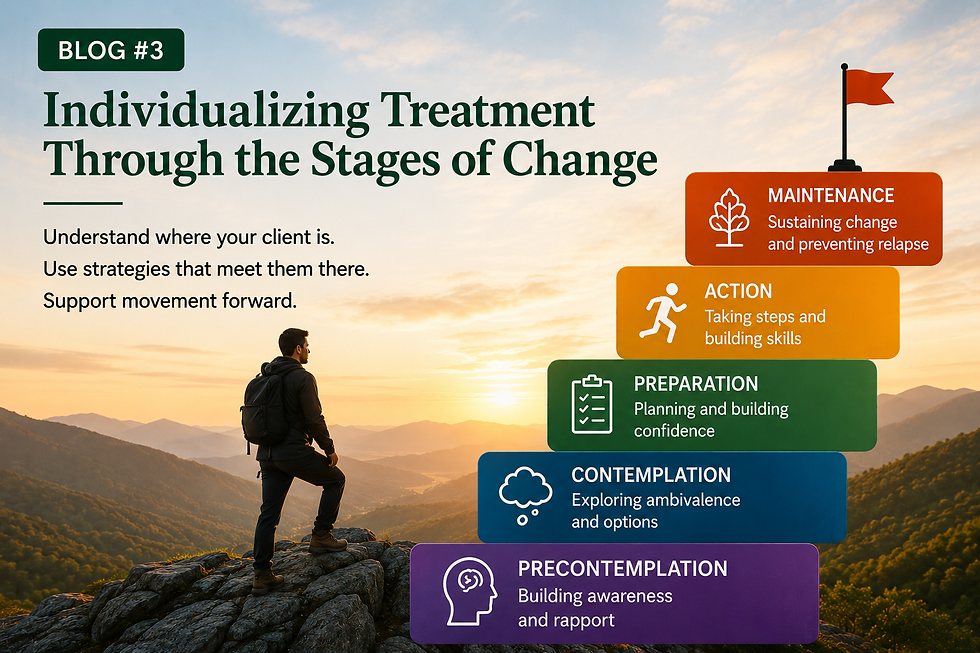
Individualizing Treatment Through the Stages of Change
- Valerie V. Hammond
- May 8
- 2 min read

Not every client enters treatment ready to change immediately. Understanding the stages of change helps clinicians individualize treatment services in a way that is both realistic and effective.
One of the biggest mistakes programs can make is treating every client as though they are in the same emotional and motivational place. Clients move through change differently. Some may still be questioning whether there is a problem at all, while others are actively working toward recovery goals. Clinical interventions should reflect where the client currently is—not where we want them to be.
When treatment strategies match the client’s stage of change, clients are often more engaged, less resistant, and more open to growth.
Precontemplation
In this stage, the client may not yet recognize a problem or may feel resistant to change. They may attend treatment due to outside pressure from family, probation, employment, or legal systems rather than personal motivation.
Helpful strategies include:
Building rapport
Motivational interviewing
Exploring consequences without confrontation
Increasing awareness and insight
Asking open-ended questions
The goal during this stage is not to force change, but to reduce resistance and plant seeds of awareness.
Contemplation
Here, clients begin considering change but remain ambivalent. Part of them sees the need for change while another part fears it, questions it, or struggles to let go of old behaviors.
Helpful strategies include:
Decisional balance exercises
Exploring pros and cons
Reflective listening
Identifying personal goals and values
Helping clients explore discrepancies between current behaviors and desired outcomes
The goal is to help clients work through ambivalence and begin strengthening internal motivation.
Preparation
Clients begin planning for change and identifying action steps. They may start expressing readiness, asking for resources, or discussing plans for improving their lives.
Helpful strategies include:
Goal setting
Relapse prevention planning
Identifying support systems
Developing coping strategies
Creating structured action plans
The focus becomes strengthening readiness, confidence, and commitment to change.
Action
Clients actively begin making behavioral changes and applying what they are learning in treatment. This stage often requires significant support because change can feel uncomfortable and emotionally demanding.
Helpful strategies include:
Skill-building
Cognitive behavioral interventions
Accountability structures
Reinforcement of progress
Identifying triggers and high-risk situations
Support, encouragement, and consistency are critical during this stage.
Maintenance
Clients work to sustain changes and prevent relapse while continuing to strengthen healthier routines and behaviors over time.
Helpful strategies include:
Ongoing support
Continued coping skill development
Trigger management
Encouraging healthy routines and connections
Reinforcing long-term recovery thinking
Maintenance is not simply about avoiding relapse—it is about building stability and maintaining meaningful progress.
Understanding the stage of change allows treatment to become more individualized, clinically meaningful, and effective while helping clients feel understood rather than pressured.
By: Valerie Hammond-Mena


Comments