Maybe the Client Isn’t the One Resisting Change
- Valerie V. Hammond
- May 8
- 1 min read


In behavioral health, it is common to hear statements such as:
“The client is resistant.”
“They’re in denial.”
“They don’t want help.”
But sometimes it is worth asking a difficult question:
What if the client is not the only one resisting?
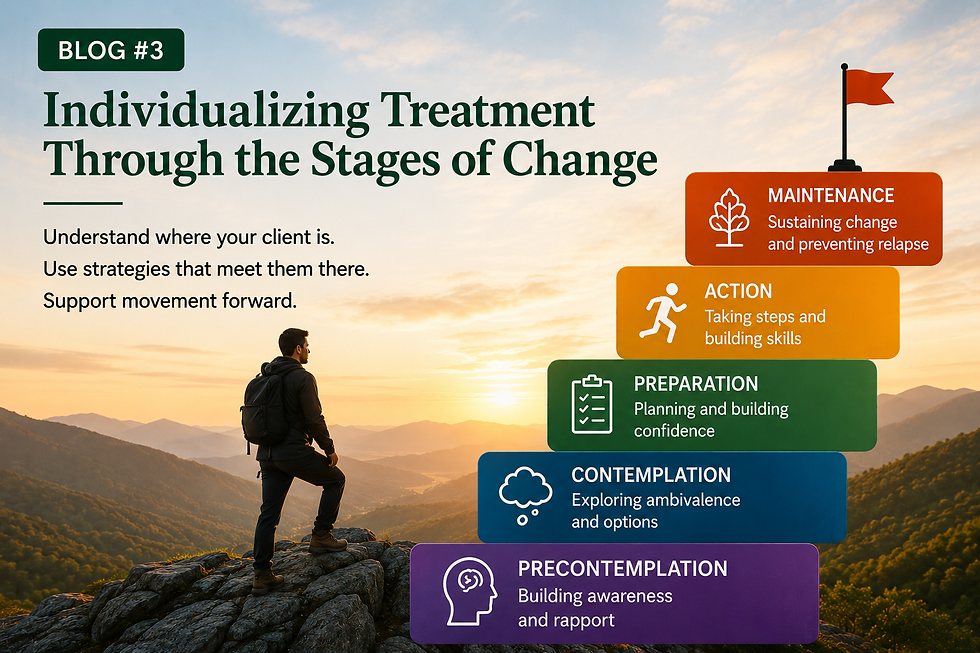
What if, as professionals, we become resistant to accepting where the client truly is in their stage of change? What if we are unintentionally pushing our agenda, our timeline, or our expectations onto someone who is simply not there yet?
When this happens, treatment can quietly become a power struggle—our will against theirs. We push harder, they pull away harder, and eventually the relationship begins to fracture. In many cases, the client disengages, leaves treatment against staff advice, or emotionally shuts down altogether.
And unfortunately, it is often the client who suffers the most consequences.
Meeting clients where they are does not mean lowering standards or abandoning accountability. It means recognizing that sustainable change rarely occurs through force, pressure, or control. Real change often begins when clients feel heard, respected, and emotionally safe enough to explore their own ambivalence.
Sometimes the most effective clinical approach is not pushing harder—it is stepping back, listening more deeply, and following the client’s lead while gently guiding the process.
The truth is, many clients are already fighting internal battles we cannot fully see. When professionals stop resisting the client’s current reality and begin working within it, treatment often becomes more collaborative, less confrontational, and ultimately more effective.
Individualized care requires flexibility, humility, patience, and self-awareness—not just from the client, but from us as professionals too.
By: Valerie Hammond-Mena


Comments