When it Connects, It Protects
- Valerie V. Hammond
- May 8
- 1 min read

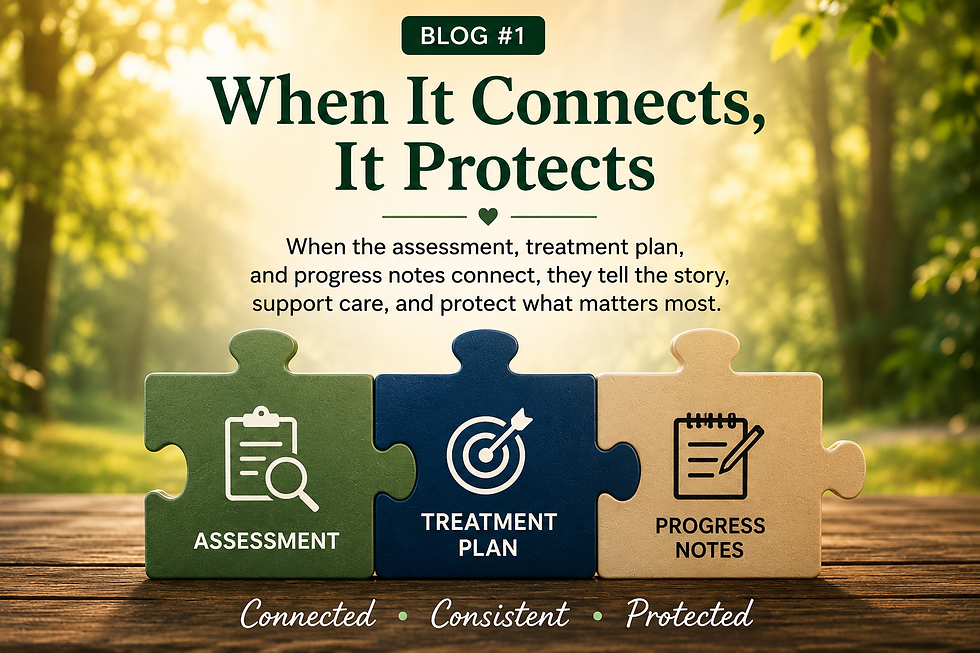
One of the most important concepts in behavioral health documentation is simple: when it connects, it protects.
A strong clinical record should read like a story. The assessment identifies the client’s needs, the treatment plan outlines how those needs will be addressed, and the progress notes demonstrate the work being done toward those goals. When those pieces connect, the documentation reflects purposeful, individualized care—not just completed paperwork.
Too often, organizations struggle because assessments say one thing, treatment plans say another, and progress notes fail to tie everything together. This creates gaps in clinical integrity and increases audit risk.
Good documentation is not about writing more. It is about writing with intention and alignment.
When the assessment, treatment plan, and progress notes connect clearly, they not only support compliance—they tell the story of the client’s journey, the clinical reasoning behind services, and the progress being made along the way.
Because when it connects, it protects.
By: Valerie Hammond-Mena


Comments